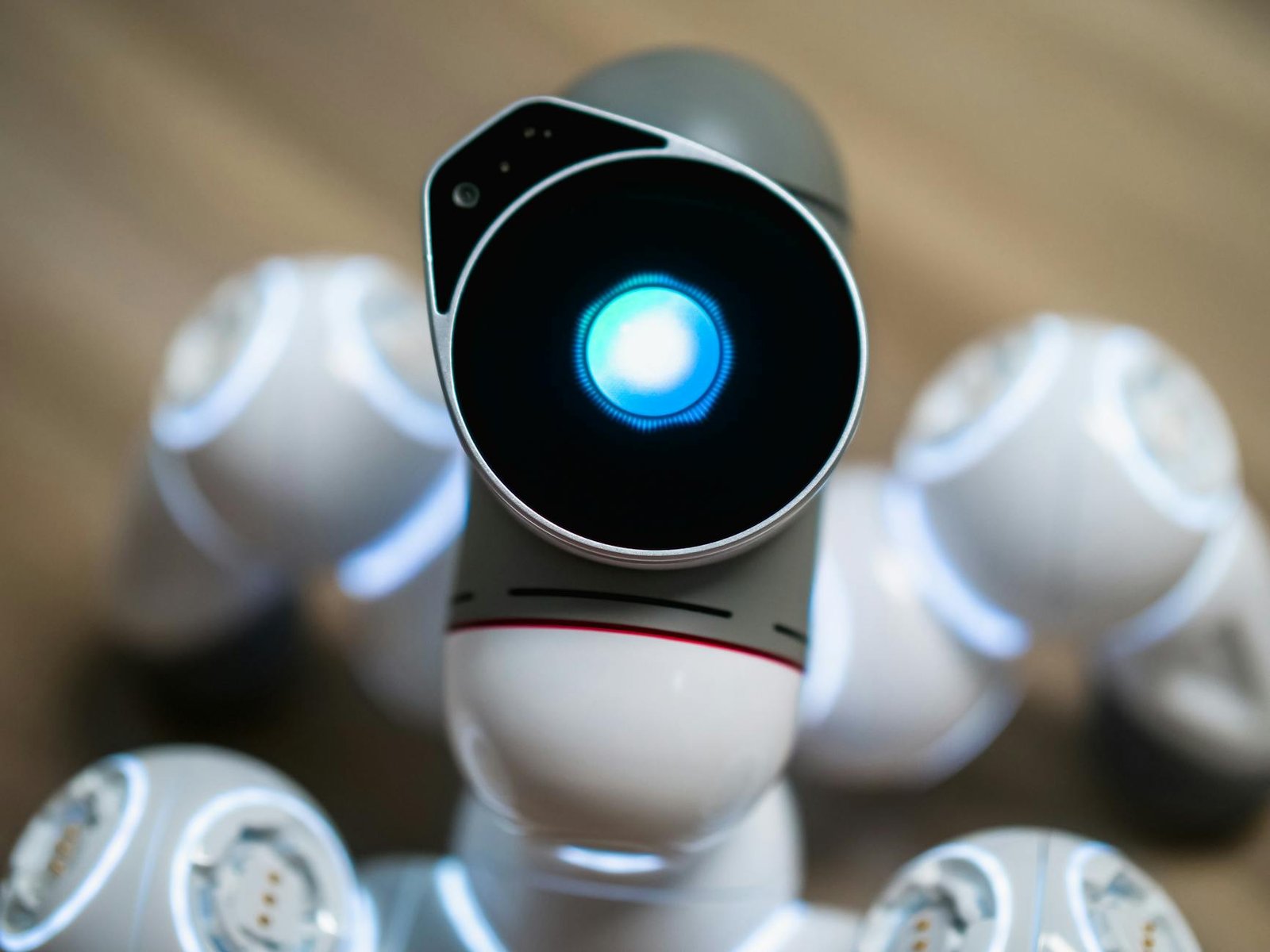
Imagine a surgeon attempting to perform a delicate operation with a robot built of steel – the slightest tremor, the smallest unexpected movement, could ruin the entire procedure. That's the reality of soft robotics, a field brimming with potential for applications like agricultural harvesting, search and rescue, and even minimally invasive surgery, yet consistently hampered by a fundamental challenge: precise control. Traditional control methods, reliant on complex feedback loops and precise sensor readings, simply don't translate well to materials that naturally deform and respond to external forces. This has kept the most ambitious designs firmly out of reach, limiting the technology's practical impact.
Researchers at the University of Pennsylvania's GRASP lab, alongside collaborators at MIT and the Max Planck Institute, are reporting a significant breakthrough utilizing a technique closely related to Artificial Neural Networks – reservoir computing – to dramatically improve control over these flexible machines. Their work, published this week in Nature Robotics, details a system that leverages a randomly connected network of electronic components, a "reservoir," to generate complex, time-varying signals. These signals, in turn, are fed into a simple, computationally efficient algorithm that allows for remarkably accurate and responsive control of the soft robot's movements, even under unpredictable conditions. Initial tests have demonstrated a 30% improvement in maneuverability compared to existing control methods for similar soft robotic arms.
The Real Impact on Users
Reservoir computing, a branch of neural networks, has gained traction in areas like audio processing and time-series analysis because of its ability to efficiently capture and represent complex, non-linear dynamics. The key innovation here is adapting this approach specifically for the chaotic, highly sensitive behavior of soft robots. Instead of painstakingly modeling the robot's physical response to commands, the reservoir essentially learns a compressed representation of that response, allowing the control algorithm to react far more quickly and accurately. This method drastically reduces the computational burden compared to traditional methods, making it feasible to implement on embedded systems within the robots themselves.
Currently, the primary beneficiaries of this research are robotics companies specializing in soft robotics, including Soft Robotics, Inc. and Redwood Robotics. These companies, which have been investing heavily in developing more controllable soft robots, stand to gain substantially from this new approach. However, established robotics firms utilizing rigid robotic systems, such as ABB and KUKA, could face increased competition as soft robotics becomes a more viable option for a wider range of applications. Smaller research groups and university labs are also seeing a surge in interest, accelerating the pace of development within the field.
Industry reaction has been overwhelmingly positive, with many experts hailing the approach as a game-changer. "This is a critical step towards unlocking the true potential of soft robotics," stated Dr. Emily Carter, a leading roboticist at Carnegie Mellon University, in a statement to AIZyla.com. "The ability to control these robots with such efficiency and robustness opens doors to applications we previously considered impossible." Concerns remain about scaling the technology and ensuring long-term reliability of the reservoir components, but the initial results are exceptionally promising.
What Happens Next
Over the next 30 days, AIZyla.com will be closely monitoring the open-source release of the Pennsylvania team's control algorithm and the experimental demonstrations planned by Soft Robotics, Inc. at the International Soft Robotics Conference in Boston. This will provide a valuable insight into the system's adaptability to different robot designs and operating environments, and importantly, demonstrate the feasibility of integrating this technology into commercially viable soft robotic systems.
Stay updated: Follow AIZyla for daily AI news explained clearly for everyone.
Stay ahead of AI -- free
Weekly digest of the best AI news, tools, and guides. No spam.